
Thailand, a vibrant and newly-industrialized country, pulsates with an awe-inspiring history. In the thriving heart of the nation, Bangkok stands as a testament to modernity, boasting cutting-edge telecommunications, stunning architecture, efficient public transportation, and a cosmopolitan atmosphere. With over 10 million residents and a burgeoning population, the city solidifies its position as a key economic hub in South East Asia.
Venturing beyond the bustling capital, Thailand’s unspoiled landscape unfolds – a countryside predominantly shaped by agriculture. In the majestic north, rugged mountains are adorned with revered temples, or ‘wats’, drawing in backpackers and tourists while embracing the country’s deep-rooted connection with Buddhism. Along the Malay Peninsula and the Gulf of Thailand in the south, sprawling tropical beaches and enticing islands, such as the famous Koh Samui, captivate travelers and locals alike.
Blessed with a perpetual tropical climate due to its proximity to the equator, Thailand basks in year-round warmth, punctuated by a monsoon season that dominates most of the summer. Hence, living in Thailand necessitates the indispensable presence of air conditioning to combat the heat.
How many expats are living in Thailand?
Despite its aging population, Thailand continues to experience a remarkable surge in population growth, driven by a recent influx of migrant workers. According to a report by the United Nations, accurately determining the exact number of migrants living in Thailand remains a daunting challenge due to a significant portion being undocumented. Nevertheless, it is estimated that the total number of foreign citizens residing in Thailand falls within the range of 3 to 4 million, with the majority hailing from the neighboring countries of Cambodia, Laos, Myanmar, and Vietnam. Notably, as of 2019, at least 112,000 workers in Thailand were classified as professional or skilled, showcasing the diverse and valuable contributions of migrant workers to the nation’s workforce.
How many British expats are living in Thailand?
According to the UK’s Institute for Public Policy Research (IPPR), approximately 41,000 British expats have chosen Thailand as their new home, making it the 17th most popular destination for British expats. It’s truly remarkable to see such a vibrant community of British expats flourishing in Thailand. Among them, a significant number have embraced the serene retirement lifestyle, while others have ventured to the bustling city of Bangkok to pursue their careers and ambitions. Thailand’s allure knows no bounds, captivating the hearts of expats from the UK with its diverse landscapes and inviting culture.
How is the political situation in Thailand and is Thailand safe for expats?
Thailand is a country undergoing rapid change in its political landscape. Despite historical challenges with establishing a stable constitution, Thailand is now making significant strides after re-establishing the Westminster system of representative parliament. This progress is evident in the country’s 72nd ranking in the Economist Intelligent Unit’s Democracy Index 2021, with a commendable score of 6.04 out of 10 for democratic rights and political stability.
However, it’s essential to acknowledge the prevalent social movements in Thailand. The country has witnessed numerous protests, with young people and the underprivileged taking the lead. Sadly, these demonstrations have intensified in recent years, raising concerns about their escalating violence. It’s crucial to note that the UK government website highlights the likelihood of terrorist attacks in Thailand, particularly cautioning against travel to the southern border with Malaysia and the border with Cambodia, due to the presence of landmines.
In terms of social and human rights issues, Thailand’s stance is quite diverse. While abortion is legal within the first 12 weeks of pregnancy, homosexuality is accepted, making Thailand a popular destination for LGBT tourists. Nonetheless, it’s important to emphasize that LGBT individuals residing in Thailand have fewer legal rights compared to other locations. It’s worth noting that gender recognition laws are also in discussion, aiming to bring about positive changes for the transgender community.
Thailand’s commitment to gender equality, however, presents a different picture. In the United Nation’s 2020 Gender Inequality Index, Thailand ranked 79th in the world, signifying the need for considerable progress in this area.
Lastly, when residing in Thailand, it’s crucial to adhere to stringent regulations regarding drugs. Possession of any amount of drugs, regardless of its size, can result in imprisonment, and possession of large quantities could lead to the death penalty. Let’s strive to engage with Thailand’s rich culture, vibrant society, and evolving political landscape while ensuring utmost respect for its laws and regulations.
What language is spoken in Thailand and do people in Thailand speak English?
Thai, also famously known as Siamese, embodies the rich cultural heritage of Thailand as its national language. This tonal language exhibits numerous regional variations and boasts an Indic script, making it a linguistic marvel.
Although English is not yet ubiquitous in Thailand, there is a growing trend of incorporating it into the educational curriculum. This presents an exciting opportunity for individuals residing in Thailand to engage in the noble pursuit of teaching English.
How did Thailand deal with COVID-19?
The response of Thailand to the COVID-19 pandemic, as detailed in the British Medical Journal, was nothing short of swift and resolute. The country swiftly enforced stringent measures in line with its 2015 Communicable Diseases Act, and following the declaration of a state of emergency on 26th March 2020, it continued to take decisive actions including:
- A heartfelt commitment to enforcing a 14-day quarantine for anyone displaying symptoms, as well as for all international travelers.
- Contact tracing supported by over 1 million volunteers
- Suspending all international flights
- A stay-at-home policy from April 2020, effectively closing offices, schools, restaurants, stores, pubs and clubs, massage parlours, gyms and other businesses
- Cancellation of large-scale events
- Suggestions to wear face masks, observe social distances and adhere to hand hygiene
- Ban on alcohol sales
As a result of Thailand’s measures, the country managed to navigate through the initial wave with notable success, recording only 3,042 cases and 57 deaths. However, the impact of the second wave was much more substantial due to the influx of undocumented migrant workers crossing the borders. In response, Thailand swiftly implemented localized strategies to contain outbreaks, resulting in the closure of schools, pubs, massage parlours, gyms, and restaurants, as well as a halt to domestic travel between regions.
Despite the higher caseloads during the second wave, the number of deaths dramatically decreased, largely affecting younger members of the workforce.
Thailand recognizes COVID-19 as a communicable disease under surveillance, treating it with a similar approach to a seasonal flu virus. Notably, no COVID-19 related documents such as vaccination certificates or test results are required upon entering Thailand.
While the wearing of masks remains voluntary, the Ministry of Public Health strongly advises the public to use masks in crowded or poorly ventilated areas. Some public buildings may mandate the use of masks. For additional information, refer to the UK government website.
What is the weather like in Thailand?
The Thai climate is simply sensational, with its hot and humid weather creating an average temperature range of 18 to 38°C. Nestled between vast areas of land and water, Thailand experiences the influence of both the summer and winter monsoons.
Imagine: six months of refreshing rainfalls during the wet season (May-October), followed by three months of invigorating dry and cooling breezes in the winter (Nov-Jan), and then three months of intense heat during the summer (Feb-Apr). Even in November, the South, particularly the area of Koh Samui, Koh Phangan, and Koh Tao, remains beautifully verdant and luscious. Thailand’s climate is truly a marvel to experience!
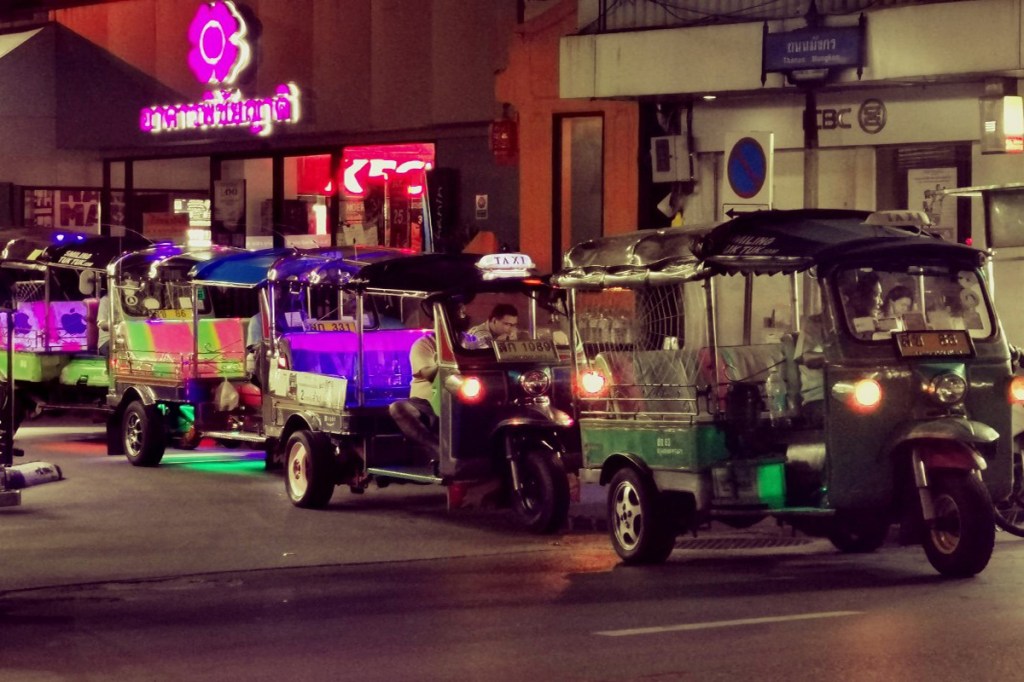
 Phuket night life - sin city